How to choose an FPV drone-countering trainer for a unit
Criteria for choosing an FPV drone-countering trainer for a unit or training center: weapons, scenarios, target parameters, instructor control and results analysis.
FPV drone-countering trainers can differ substantially in their operating model, scenarios, training weapons and instructor controls. Choosing a system for a military unit or training center requires more than checking for VR goggles or a shotgun mockup.
First define the skills the system must build: detecting and tracking an FPV target, choosing when to fire, leading the target, working in changing conditions or interacting with a real FPV pilot.
The market uses many names for these systems — FPV drone-countering trainer, anti-drone trainer, anti-drone VR, drone-countering simulator or ‘dronobiy’. A label alone does not define a system, so compare concrete training functions.
First define who the trainer must prepare
‘FPV simulator’ can describe different training systems. Some prepare FPV pilots to fly a drone; others prepare shooters to detect and engage FPV drones.
If the unit needs FPV counter-training, evaluate the second type. It should model an aerial FPV target and let a shooter practice detection, tracking, aiming and simulated engagement.
A separate class is two-sided simulation, where a shooter and FPV pilot act in one virtual environment. This is useful when training must include another participant’s decisions.
Which skills an anti-drone trainer should build
Countering an FPV drone is more than the instant of firing. The shooter must detect a small aerial target, assess its movement, track it and choose when to open fire.
Check whether the system supports detection, recognition, tracking, trajectory prediction, aiming and engagement in sequence. Fast targets also require leading fire rather than one predictable route.
The more target parameters the instructor can change, the less training depends on memorizing one scenario.
Check which weapons can be used for training
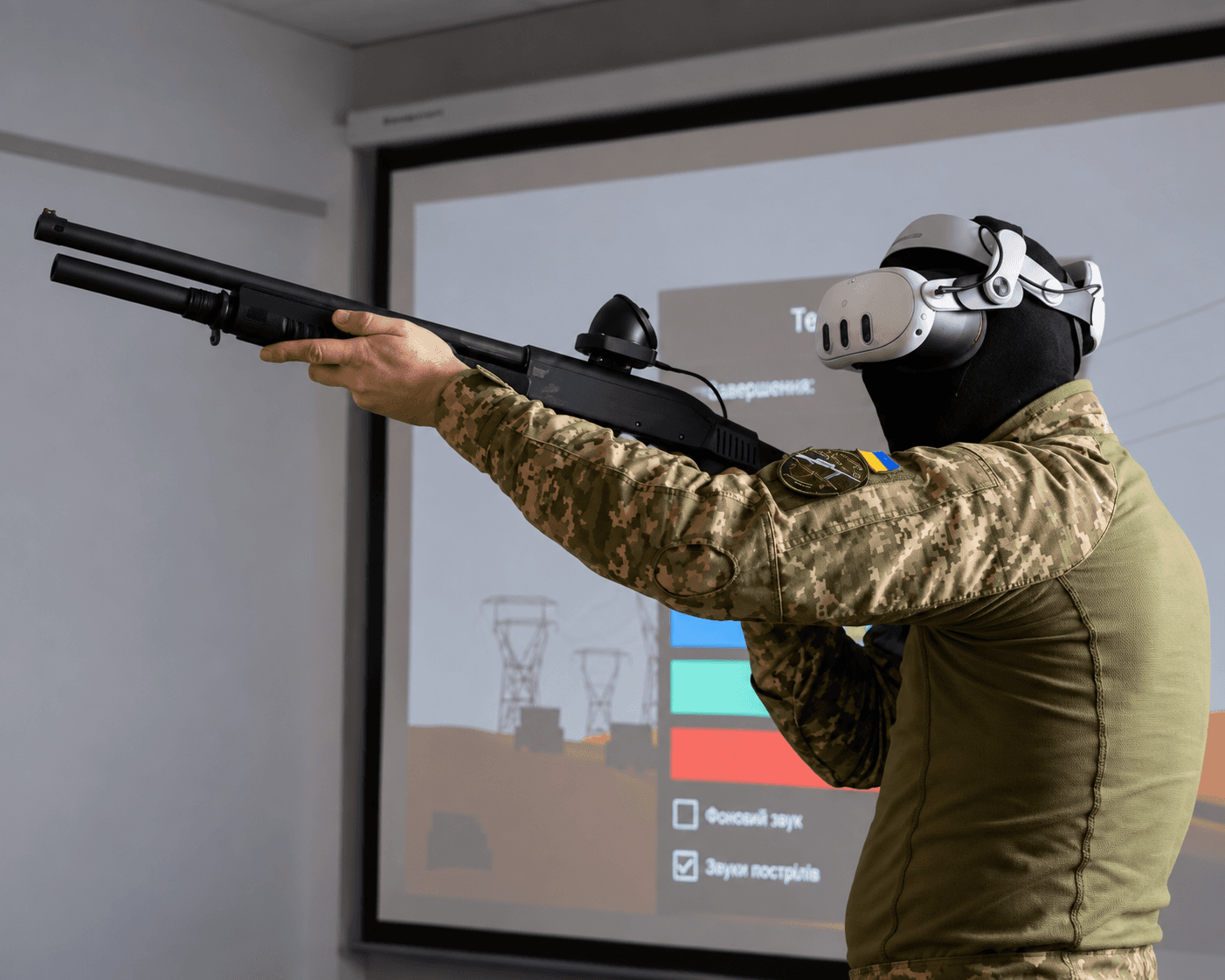
Systems may use mockups of a pump-action shotgun, rifle or other small arms. Beyond appearance, evaluate mass and dimensions, software interaction and which firing parameters are reproduced.
If different user groups will train, confirm which weapons the configuration supports and whether it can be expanded.
Evaluate scenarios and FPV target behavior
Compare whether speed, altitude, route, direction and appearance distance can be set, along with time of day, visibility, weather and training location.
A unit may need checkpoint, trench, moving or vehicle scenarios. Compare the concrete exercises an instructor can run rather than the number of advertised modes.
Instructor controls matter as much as VR
VR goggles or a large screen do not define a system’s training value. The instructor should set scenario parameters, target characteristics and environmental conditions for the trainee’s level.
After the exercise, results should be reviewable: what the system records, what the instructor sees and whether a difficult episode can be repeated. This control distinguishes a training complex from a simple VR demonstration.
When an FPV pilot is needed in the same scenario
For basic shooter preparation, software can control the FPV target. With a second participant, an FPV pilot changes the drone’s route, altitude, direction and attack tactics while the shooter reacts to those decisions.
If this format is required, verify that the system supports a shared virtual environment for shooter and FPV pilot rather than only automated targets.
What to check before purchasing a training complex
Before deciding, define the unit’s training task: who will train, with which weapons, in which scenarios and how many users. Then compare weapon mockups, target parameters, instructor controls, locations, results analysis and expandability.
Also confirm the supply set, room and equipment requirements, deployment, instructor training, warranty and technical support. This compares real capabilities rather than labels such as anti-drone, VR or dronobiy.
VARTA ‘Counter-Drone’ for shooter training
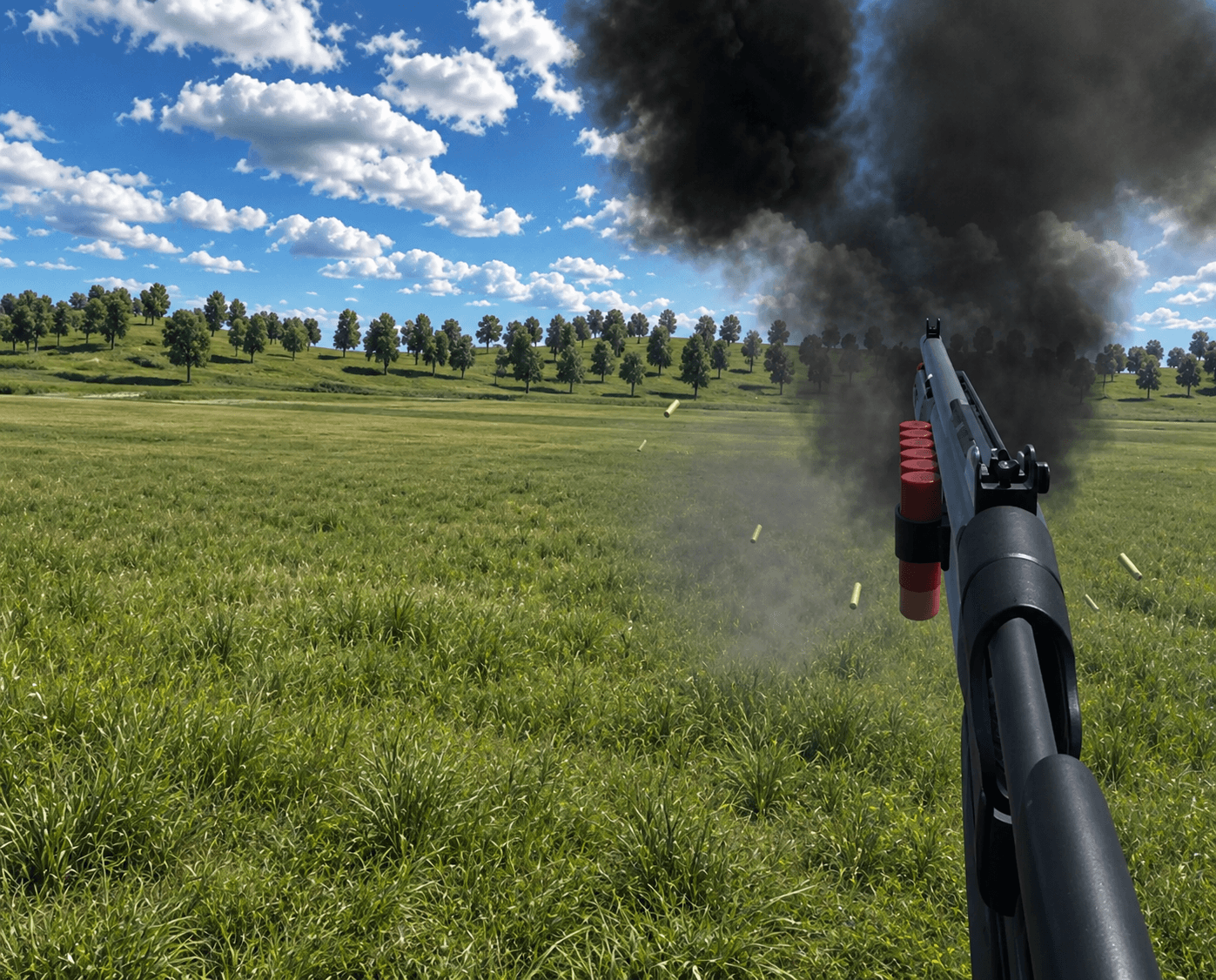
Within VARTA.SYSTEMS, the VARTA ‘Counter-Drone’ training complex prepares shooters to counter FPV drones. It supports detection and recognition, tracking, trajectory prediction, aiming and engagement.
The instructor can change FPV target and environment parameters to build exercises of different difficulty. Training can use a pump-action shotgun and rifle in tactical scenarios. This is an interactive FPV-countering trainer and combat-scenario simulator for shooters, not a pilot-training FPV simulator.
VARTA ‘FPV Duel’ for two-sided training
When training requires active shooter–pilot interaction, VARTA.SYSTEMS uses VARTA ‘FPV Duel’. The pilot controls the drone with a physical controller in the same virtual environment as the shooter.
The two systems serve different training tasks: ‘Counter-Drone’ focuses on systematic shooter preparation, while ‘FPV Duel’ adds two-sided interaction with an active pilot.
Frequently asked questions
Define the training task, then compare weapons, target behavior, scenarios, instructor controls, results analysis, equipment and deployment.