FPV drone-countering trainer: shotgun and rifle fire training
How the VARTA ‘Counter-Drone’ trainer drills shotgun and rifle fire against FPV drones, and how it differs from VARTA ‘FPV Duel’.
FPV drones are a distinct type of aerial threat, and countering them requires more than basic weapons skills. A shooter must detect a small target in time, assess its movement, track it, choose the moment to fire and act under time pressure.
An FPV drone-countering trainer makes it possible to practice this sequence systematically in a controlled environment. The shooter can repeat exercises with different flight parameters, weather conditions and tactical situations without live ammunition or real UAVs.
VARTA.SYSTEMS developed the VARTA ‘Counter-Drone’ training complex for preparing shooters to detect, track and engage FPV drones.
What skills are needed to counter FPV drones
Work against an FPV target begins before the shot. The first task is to detect and identify the drone, a skill that can be practiced at different times of day and in different weather conditions.
After detection, the shooter tracks the moving target, assesses its trajectory and chooses the aiming point. With a fast FPV target, predicting its movement and leading the shot are essential.
The next stage is engaging the aerial target. Training therefore follows the full sequence: detection, tracking, aiming and engagement of the FPV drone. These stages form the logic of VARTA ‘Counter-Drone’ training.
Firing at FPV drones with a shotgun and rifle
Counter-FPV preparation can vary with the weapon used. VARTA ‘Counter-Drone’ supports exercises with a pump-action shotgun and a Kalashnikov rifle.
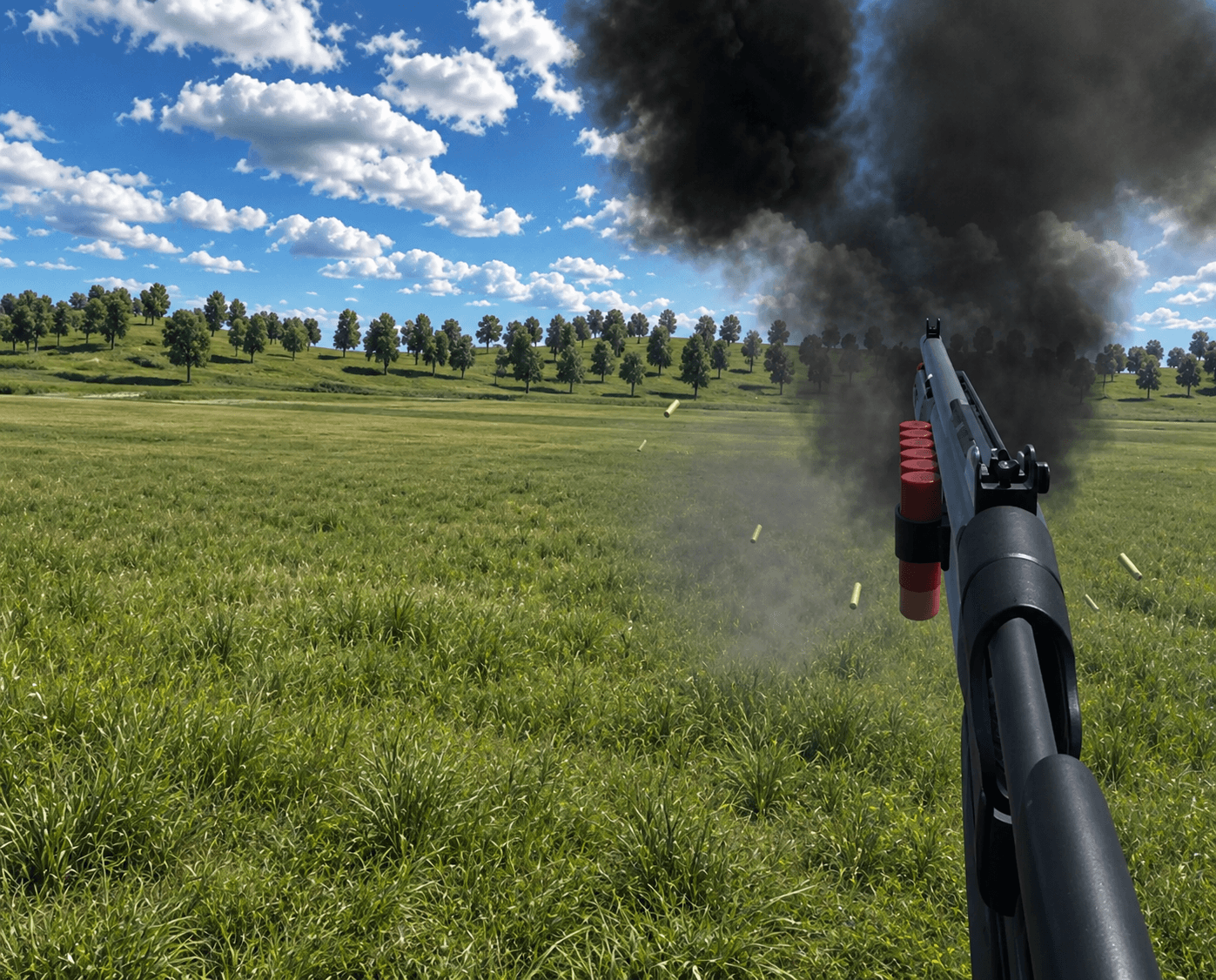
With the pump-action shotgun, the training environment can model parameters related to shot spread. Rifle exercises focus on tracking the moving aerial target, choosing when to open fire and engaging the FPV drone.
The trainer is not intended to replace every form of fire training. It enables systematic repetition of FPV-specific exercises and gradual increases in difficulty.
How training conditions change
A single flight path would quickly turn the exercise into memorizing a scenario. Training therefore needs variable target and environmental conditions.
In VARTA ‘Counter-Drone’, the instructor can control FPV drone parameters such as target count, speed, altitude, route and appearance distance. The environment can also change: day and night, rain, fog and wind are supported.
Changing these parameters creates exercises of different difficulty instead of tying training to one fixed scenario.
Tactical FPV countering scenarios
The shooter’s conditions directly affect the ability to detect and engage a drone in time. Training therefore is not limited to one static position.
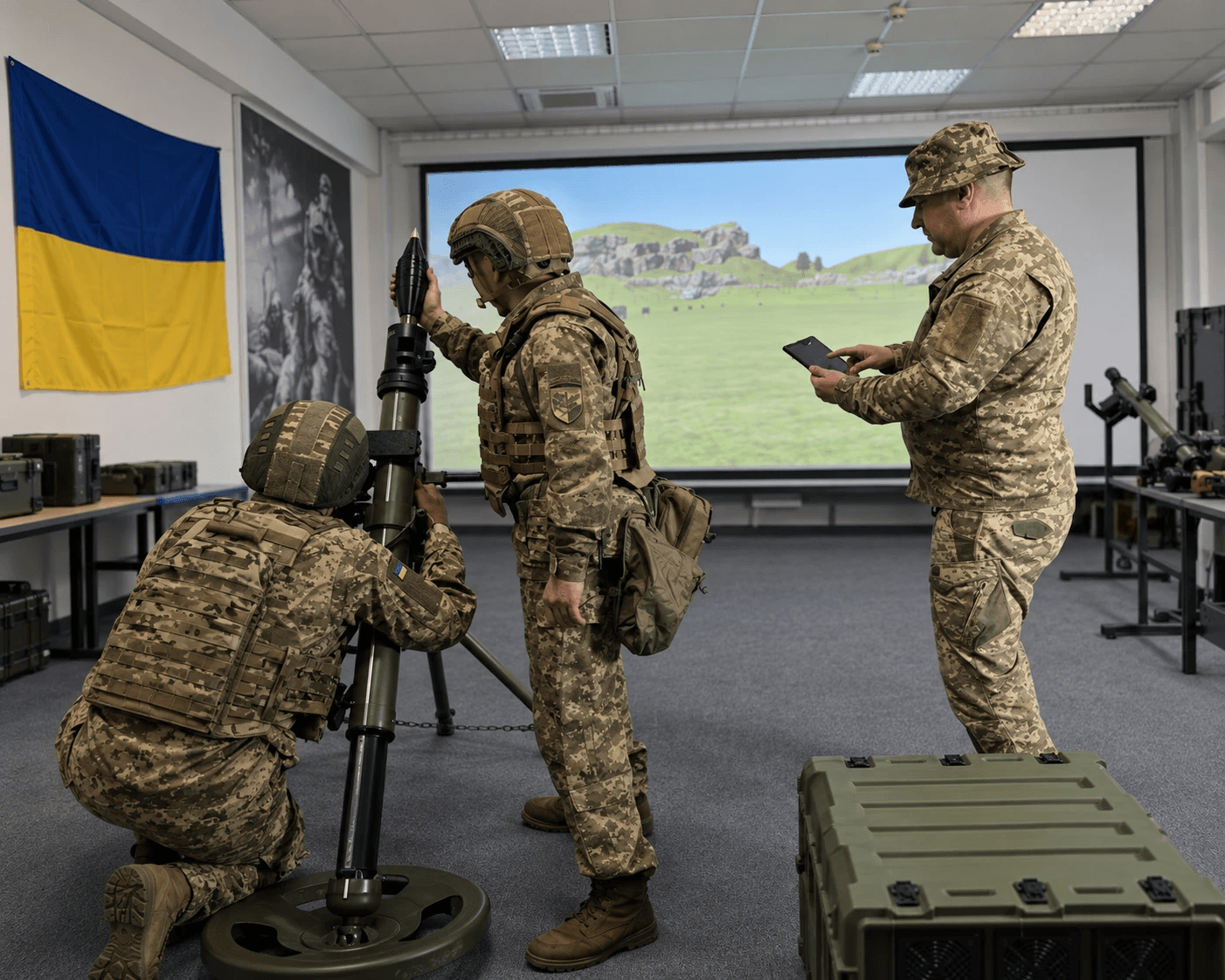
VARTA ‘Counter-Drone’ includes scenarios at a checkpoint, in a trench, on the move and from a vehicle. Training can be individual or group-based.
These scenarios combine weapon handling with orientation in a specific training situation and a response to an aerial target.
The instructor’s role in training
The instructor does more than start an exercise. They control scenario parameters and can change the conditions in which the shooter works.
The software sets the environment, drone and exercise characteristics. This lets the session match the shooter’s level and become progressively more difficult.
Repeatable training also makes it possible to review the exercise result and correct the shooter’s actions before the next run.
VARTA ‘Counter-Drone’ is a VARTA.SYSTEMS training complex for preparing shooters to counter FPV drones in a virtual training environment.
The complex supports detection and identification, tracking of a moving target, trajectory prediction and engagement with a pump-action shotgun or rifle. The instructor controls training conditions and FPV-target characteristics.
When an FPV pilot joins the training
The base VARTA ‘Counter-Drone’ focuses on shooter preparation. When a second active participant is an FPV drone operator, the separate VARTA ‘FPV Duel’ module is used.
It adds an FPV pilot who controls the drone with a physical controller in the same virtual space as the shooter. The target’s behavior is then shaped by the second participant as well as the scenario parameters.
Frequently asked questions
It is a training system for practicing detection, tracking, aiming and engagement of FPV targets in a controlled training environment.